
AR Christian learning for kids transforms traditional Bible study into an interactive, immersive experience that strengthens faith and improves understanding. By combining Scripture with augmented reality, children can see, hear, and engage with Bible stories in a way that makes lessons more memorable and meaningful.
If you want your child to move beyond passive reading and truly connect with God’s Word, this guide will show you why AR learning works, how to use it effectively, and which options are best for your family.

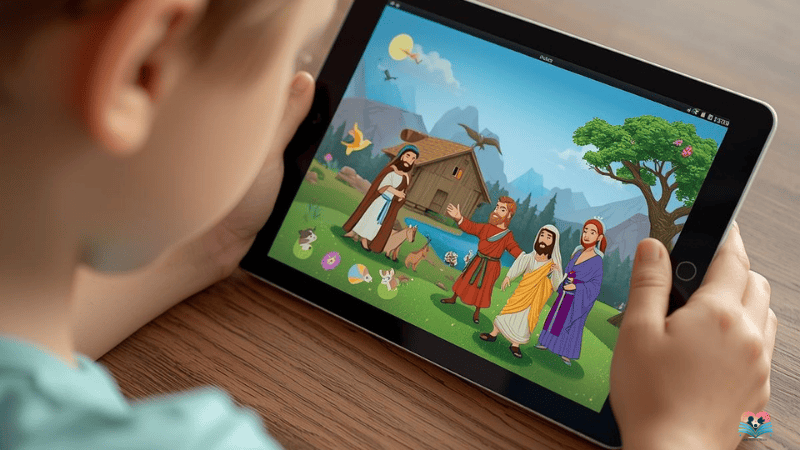
AR Christian learning for kids blends biblical teaching with augmented reality technology. Instead of only reading a story about David and Goliath, children can watch scenes unfold in 3D, explore historical settings, and interact with characters directly from a device.
This approach strengthens:
Unlike traditional worksheets or lectures, AR tools allow children to participate in the lesson rather than simply listen.
If you want to see how families are already using this method, explore this guide on augmented reality Bible lessons for families.
Parents often ask whether technology distracts from faith. The answer depends on how it is used. When rooted in Scripture and guided by parents, AR enhances spiritual learning rather than replacing it.
According to research from Barna Group, a child’s spiritual worldview is often largely formed before the age of 13, which highlights the importance of intentional faith education during early years.
Children learn better when multiple senses are involved. Reading activates one pathway. Seeing and interacting activate several.
For example:
Studies show interactive learning increases retention compared to passive reading alone. When kids tap, explore, and respond, their brains encode information more deeply.
Practical Tip: After an AR session, ask your child to retell the story in their own words. This reinforces understanding and builds confidence.
AR often sparks curiosity. Children naturally ask:
These questions create meaningful family conversations.
For deeper guidance, read our blog on interactive Bible study for kids with AR guide.

Using AR effectively requires intention. Here is how to make it spiritually impactful instead of just entertaining.
Select resources rooted firmly in biblical truth. Avoid apps that prioritize entertainment over doctrine.
A great starting point is:
Bible Study with Interactive Augmented Reality
Do not let the device replace conversation. After viewing:
Example: After learning about kindness in the Good Samaritan story, challenge your child to show kindness at school the next day.
Young children benefit from 15 to 25-minute sessions. Quality engagement matters more than length.
| Feature | Traditional Bible Study | AR Christian Learning |
| Engagement Level | Moderate | High |
| Visual Context | Limited | Immersive 3D scenes |
| Memory Retention | Depends on repetition | Increased through interaction |
| Parent Discussion | Essential | Essential |
| Excitement Factor | Varies | Strong initial engagement |
While traditional study remains foundational, AR adds an experiential layer that many children find motivating.
Not all resources are equal. Consider these factors:
Check whether the program works on tablets, smartphones, or both.
Always review content for doctrinal alignment with your family’s beliefs.
To explore more faith-based digital tools, browse the full MJ Family Reads eBooks Collection here.
Here is a sample structure you can follow:
| Day | Activity | Focus |
| Monday | Read the Scripture passage | Foundation |
| Wednesday | AR interactive session | Visualization |
| Friday | Reflection & prayer | Application |
| Sunday | Family discussion | Reinforcement |
This balanced rhythm ensures technology supports, rather than replaces, Scripture reading.
Research from the Pew Research Center shows that religious engagement among younger generations continues to shift, reinforcing the need for intentional and engaging faith formation at home.
AR Christian learning builds more than knowledge.
Children who understand Scripture feel more confident discussing their faith.
AR works beautifully in Christian homeschooling settings by adding depth to the curriculum.
When parents and children explore together, spiritual connection grows.
When supervised and Scripture-centred, it becomes a teaching tool rather than a distraction.
No. It supplements reading by adding context and engagement.
If it increases your child’s love for Scripture, the long-term value is significant.

AR Christian learning for kids provides a dynamic way to deepen biblical understanding while keeping children engaged and curious. When paired with Scripture reading, prayer, and family discussion, it becomes a powerful discipleship tool.
Parents today face the challenge of raising faith-strong children in a digital world. Instead of rejecting technology entirely, you can redeem it for God’s purpose.
If you are ready to strengthen your child’s faith journey, explore the resources available and begin building an engaging, Scripture-centred routine today.
Christianity teaches that there is one God who created the world and loves every person. Jesus Christ is God’s Son who came to Earth to save people from sin. The Bible is God’s Word and guides believers in truth. Christians believe in prayer, forgiveness, heaven, loving others, and sharing the Gospel. The Ten Commandments teach moral living. Baptism and communion are important practices. Jesus rose from the dead. Faith means trusting God even when you cannot see Him.
The 5 R’s Bible study method helps children and adults engage deeply with Scripture through a structured approach. The five steps are Read, Rewrite, Restate, Relate, and Respond. First, read the passage carefully. Next, rewrite it in your own words. Then restate the main idea. Relate it to your life today. Finally, respond through prayer or action. This method encourages comprehension, application, and spiritual growth.
The 20 questions game for Christians is a faith-based guessing game where players ask yes-or-no questions to identify a Bible character, story, or concept. For example, one person thinks of Moses, and others ask questions like “Was this person in the Old Testament?” or “Did this person lead people out of Egypt?” It strengthens biblical knowledge while making learning interactive and fun for families or church groups.
The 3 C’s of salvation often stand for Confession, Commitment, and Change. Confession means admitting sin and believing in Jesus as Savior. Commitment involves choosing to follow Christ daily. Change reflects the transformation that happens as believers grow spiritually. These principles help children understand salvation in a simple and memorable way while emphasizing both faith and life transformation.
Most Recent Parenting Guides: 9 Best Positive Tips To Try says:
[…] education. Parents who want to introduce values and faith-based learning can explore resources like interactive Christian learning for kids, which combine education and values in engaging […]
Ebooks for Spiritual Growth: Powerful to Transform Your Life says:
[…] learning, you may also appreciate how technology enhances Christian education in our guide on AR Christian learning for kids’ interactive […]