A food coloring book for kids turns familiar foods into an easy, screen-free creative activity. Simple food pictures give children opportunities to practice coloring, recognize everyday foods, make creative choices, and enjoy independent play. For families looking for a ready-to-use option, explore the MJ Family Reads Food Coloring Book for Kids.
A food coloring book for kids makes coloring more relatable by featuring something children encounter every day: food. Familiar pictures can make it easier for young children to recognize what they are coloring while giving them plenty of freedom to experiment with crayons and colors.
Think about how often food appears in a child’s day.
Fruit at breakfast, a favorite afternoon snack, vegetables at dinner, and perhaps a special dessert. Put those familiar objects onto coloring pages, and children have an activity they can understand right away.
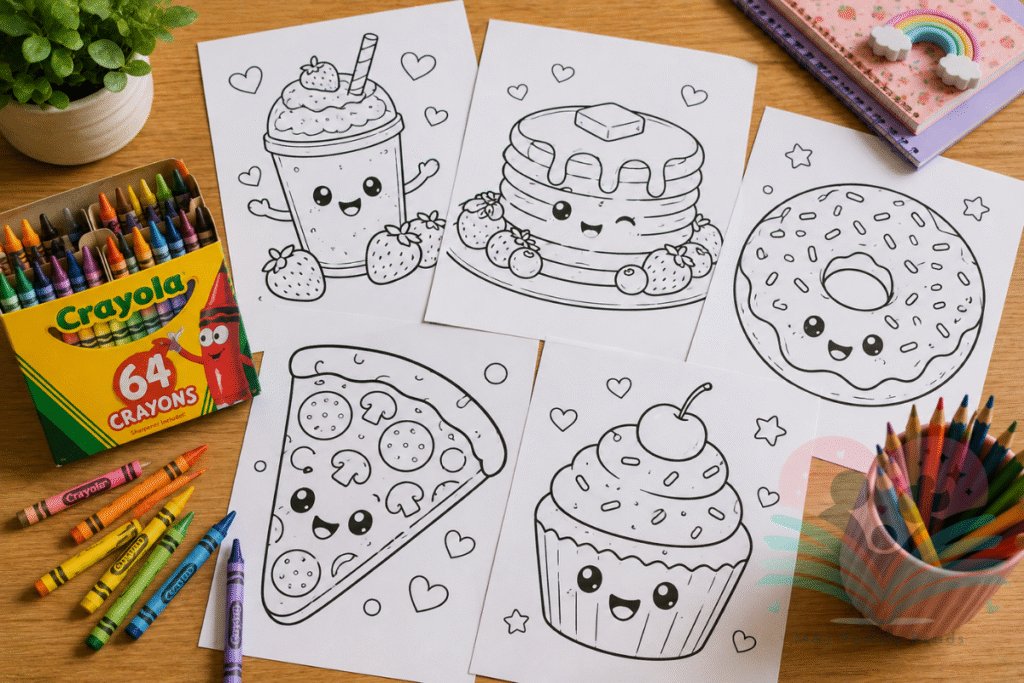
Food-themed coloring books commonly include pictures such as:
Current food coloring resources for children often combine these familiar subjects with bold outlines and simple illustrations, making the pages easier for younger colorers to approach.
For children who are still getting comfortable with crayons, simplicity can make a big difference. MJ Family Reads also explains how large, simple pictures help beginning colorers by giving little hands more room to make marks and experiment.
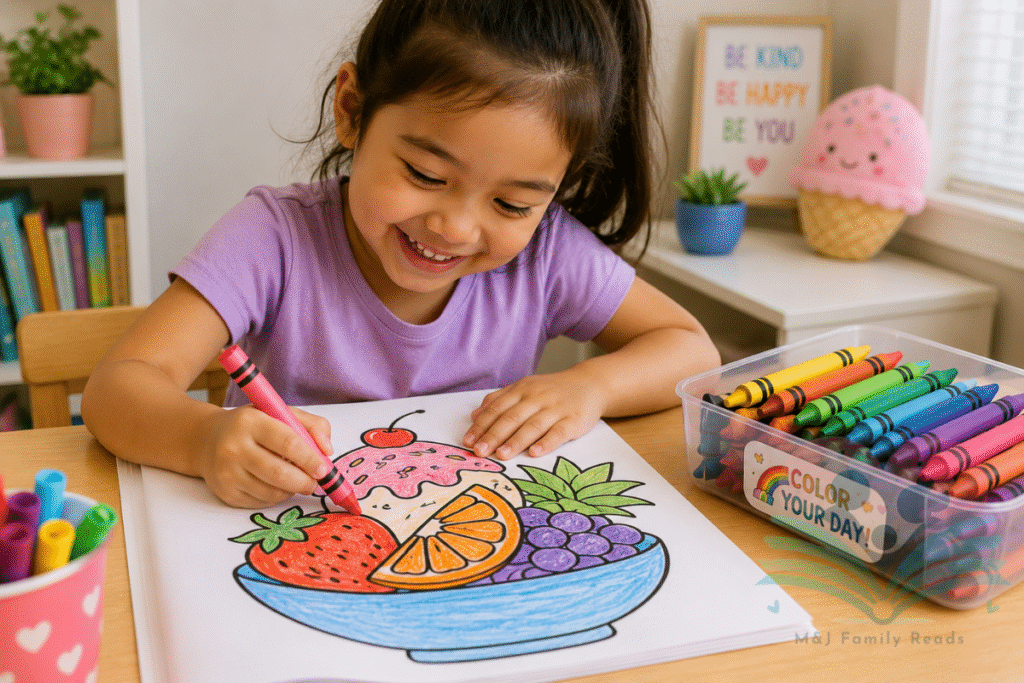
Coloring is entertaining, but children are also using their hands, eyes, attention, and imagination throughout the activity. A well-designed food coloring book for kids gives them repeated opportunities to practice these developing abilities in a relaxed setting.
Holding a crayon and moving it across a page uses the small muscles of the hands and fingers.
Young children may begin with broad scribbles before gradually gaining more control over their movements. Coloring gives them a reason to keep practicing without turning that practice into a formal exercise.
Children look at part of a picture and try to move their crayon toward it. That simple process requires their eyes and hands to work together.
Pages with large coloring areas can make this easier for beginners. If your child prefers especially spacious designs, our guide to large-print coloring books for toddlers can help you understand why bigger pictures work well for early coloring.
Food pictures can also start conversations.
If your child is coloring an apple, you might ask:
“What fruit is this?”
“Have you eaten one before?”
“What color would you like your apple to be?”
The apple does not have to be red or green, either. A purple apple is perfectly welcome during creative time.
Every page gives children small decisions to make.
They can choose the picture, select their crayons, decide where to start, and create their own color combinations. No cupcake, strawberry, or slice of pizza needs to look realistic.
The goal is to enjoy creating.
A food coloring book for kids is an easy activity to keep nearby when you want something creative that does not depend on a screen. With a coloring book and age-appropriate crayons, children can get started without an elaborate setup.
Coloring can fit naturally into:
| Moment | How a Coloring Book Can Fit In |
| Quiet time | Offers a calm activity children can do at their own pace |
| Rainy afternoons | Brings creative play indoors |
| Travel | Gives children something hands-on to do |
| Restaurant waits | Provides a familiar activity while waiting |
| Family time | Parents and children can color and talk together |
| Creative play | Lets children experiment with colors and ideas |
Screen-free activities do not have to be complicated to hold a child’s interest. Familiar subjects and approachable pictures can be enough to encourage them to pick up a crayon and start exploring.
Children who enjoy nature as much as food may also like switching themes occasionally. A butterflies and flowers coloring book can add another style of creative coloring to your family’s activity collection.
The best food coloring book for kids should match your child’s age, interests, and current coloring ability. For younger or beginning colorers, clear pictures and plenty of open coloring space are often more inviting than pages packed with tiny details.
Look for recognizable foods, clear outlines, approachable illustrations, varied designs, and enough open space to color comfortably.
Simple pages can help children focus on the fun of coloring rather than struggling with intricate areas. Similar design features, especially bold outlines and easy-to-color pictures, appear often in current food coloring resources for young children.
Variety matters, too.
One day your child might want to color fruit. The next day, a dessert may suddenly become the most exciting page in the entire book.
Following those interests can keep coloring enjoyable rather than making it feel like another assignment.
If you’re searching for a food-themed activity to add to your child’s creative routine, discover the Food Coloring Book for Kids from MJ Family Reads.
The easiest way to make food coloring engaging is to let your child lead. Offer crayons, let them choose a page, and use the pictures as conversation starters when they want you to join in.
Try questions such as:
You don’t need to correct unusual color choices.
A blue banana, rainbow hamburger, or green cupcake can simply be part of the fun.
For younger children especially, staying perfectly inside the lines should not be the goal. Give them room to scribble, experiment, change colors, and finish when they are ready. MJ Family Reads follows the same play-first approach in its guidance on big coloring books for toddlers.
Food coloring books are available for different age groups, including toddlers, preschoolers, and older children. Choose illustrations and coloring tools that suit your child’s age and current abilities, and supervise younger children as appropriate.
Yes. Moving and controlling crayons gives children opportunities to use their hands and fingers while coordinating their movements with what they see on the page.
Food coloring pages use familiar objects that children encounter regularly. Coloring pictures of fruits, vegetables, snacks, and meals can encourage recognition, conversation, vocabulary, and creative expression.
Simple pictures with large open spaces can be easier for beginning colorers. They provide more room for broad coloring movements without requiring children to manage many tiny details.
Yes. A physical coloring book and crayons offer a straightforward, hands-on activity that works well during quiet time, travel, rainy afternoons, and everyday creative play.
A food coloring book for kids can turn familiar fruits, snacks, meals, and treats into pages filled with imagination.
Children get an enjoyable screen-free activity while practicing hand movements, coordination, recognition, and creative decision-making. Parents get something refreshingly simple: open the book, bring out the crayons, and let the coloring begin.
MJ Family Reads creates family-friendly resources designed to make creative time enjoyable and approachable. If your child loves coloring and familiar food themes, explore the MJ Family Reads Food Coloring Book for Kids on Amazon and add a little more color to their next creative session.