
Does coloring reduce stress? Yes, research suggests that coloring, especially structured patterns such as mandalas, can help lower perceived stress and anxiety in the short term. Coloring gives your attention a simple, repetitive task, which may encourage mindfulness and provide a calming break from stressful thoughts.
For an easy way to add coloring to your relaxation routine, explore the MJ Family Reads coloring book on Amazon.
Yes, coloring can reduce stress for some people, particularly when used as a short, focused relaxation activity. Recent research suggests structured coloring may reduce perceived stress and anxiety, although results vary by person, setting, design, and session length.
A 2026 meta-analysis examining 17 controlled studies involving 987 hospitalized adults found that mandala coloring was associated with significant reductions in both anxiety and stress.
Another randomized controlled trial involving nurses found that mindful mandala coloring reduced perceived stress compared with a control group. Researchers suggested that increased state mindfulness may help explain the effect.
Research has also observed anxiety reductions in other settings. In a randomized trial involving emergency department patients, participants given adult coloring activities experienced a larger reduction in self-reported anxiety after two hours than those receiving a placebo activity.
The evidence is encouraging, although coloring should be viewed as a simple stress-management activity rather than a treatment for ongoing anxiety or mental health conditions.
If you want to explore this activity further, see our guide to coloring books for stress relief and relaxation.
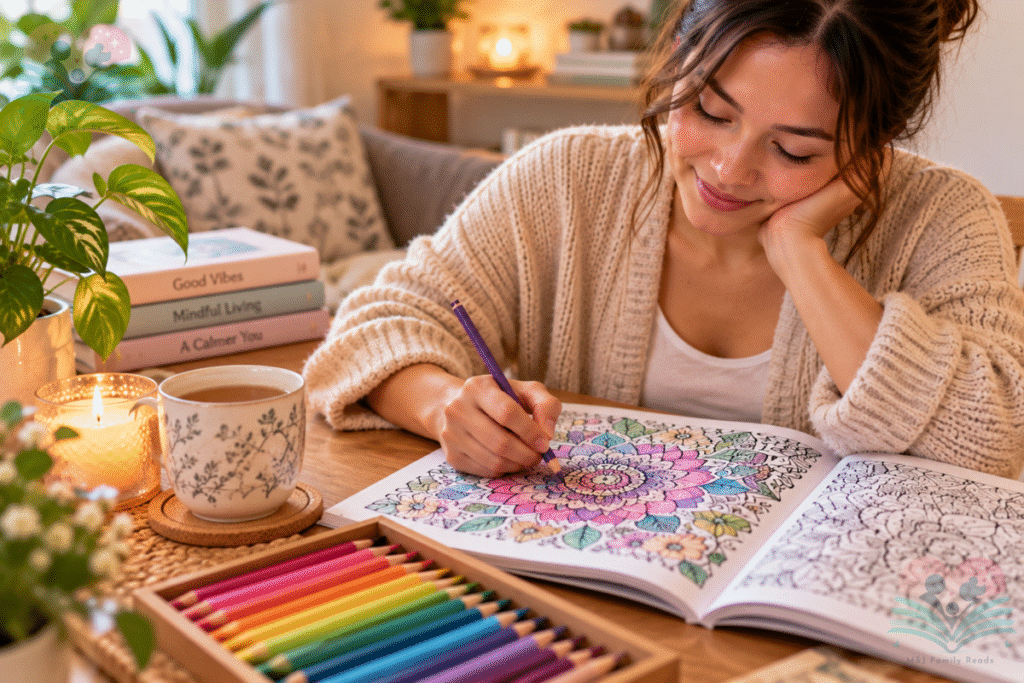
Coloring may help reduce stress because it directs your attention toward a manageable, repetitive activity. Choosing colors, filling small spaces, and following a pattern can keep your mind engaged in the present moment, giving stressful thoughts less room to dominate your attention.
One possible explanation is mindfulness.
When you color, you naturally pay attention to details such as:
This focused attention may create a temporary mental pause from worries, deadlines, screens, and everyday demands.
In a randomized study involving nurses, researchers found that reduced perceived stress occurred alongside increased state mindfulness.
Structured patterns may be particularly useful. A randomized study of adults aged 55–75 found that 20 minutes of mandala coloring resulted in significantly lower anxiety than a reading control activity. Participants also reported feeling calmer, more at ease, rested, and satisfied.
For more ideas on choosing designs that suit your routine, explore our guide to the best adult coloring books for stress relief.
A coloring session does not need to take hours to feel worthwhile. Research has observed positive effects in sessions lasting around 20–30 minutes, making coloring an easy activity to fit into a lunch break, quiet evening, or bedtime routine.
No universal amount of time guarantees stress relief.
A practical starting point is 15–30 minutes.
Try setting aside your phone, choosing a design you enjoy, and coloring without worrying about finishing the entire page.
You could use coloring:
| Time | How to Use Coloring |
| Morning | Spend 10–15 minutes coloring before checking messages |
| Work break | Color one small section to mentally reset |
| After work | Use a 20–30 minute session to transition into your evening |
| Before bed | Choose a quiet coloring activity instead of more screen time |
| Stressful moments | Focus on a simple pattern for a few minutes |
The goal is not to create perfect artwork. Choose a pace that feels comfortable and gives your attention somewhere pleasant to settle.
The best coloring pages for stress relief are designs you genuinely enjoy and can complete without feeling pressured. Research has frequently studied structured designs such as mandalas, but your ideal choice may be floral pages, animals, geometric patterns, landscapes, or other calming illustrations.
Consider the level of detail, too.
Highly intricate pages can provide longer periods of focused attention. Simpler patterns may work better when you are tired or only have a few minutes available.
You may want to experiment with:
Teens and adults can both use coloring as an accessible creative activity. Our guide to coloring books for teens and adults explains more ways to include coloring in a creative routine.
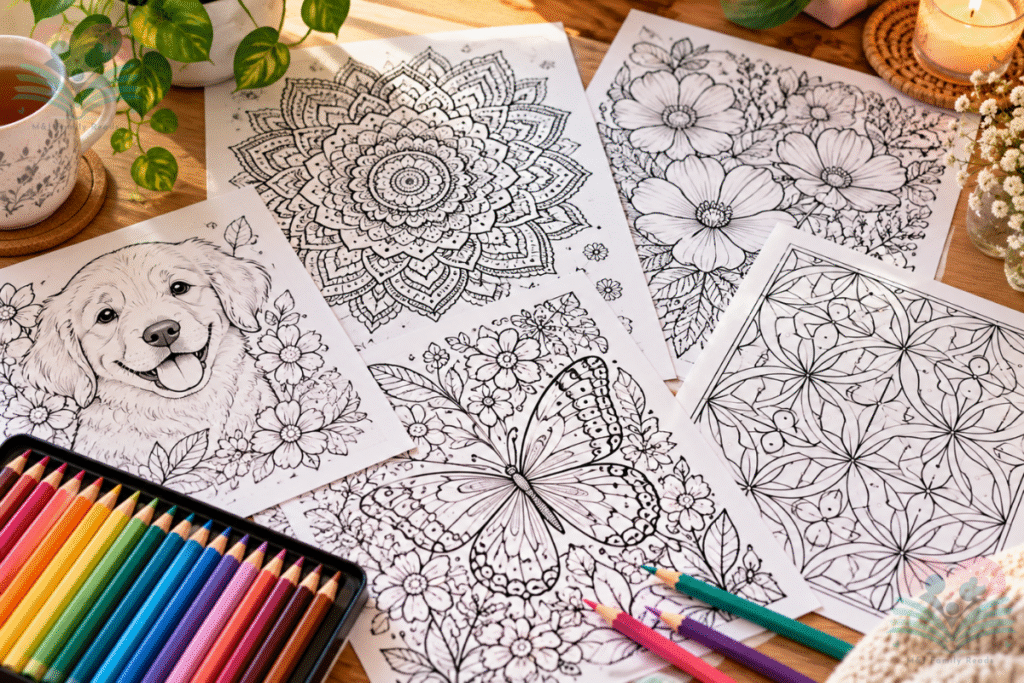
Coloring works best when you make the experience easy, comfortable, and pressure-free. Create a small routine around the activity so your brain begins to associate coloring time with slowing down and stepping away from everyday distractions.
Start with five simple steps:
You can pair coloring with other calming habits such as quiet music, breathing exercises, tea, or a screen-free evening routine.
If you want a ready-to-use option, explore the MJ Family Reads coloring book on Amazon and add a few minutes of creative downtime to your day.
Coloring can be relaxing, but coloring by yourself is not the same as professional art therapy. Art therapy is a mental health profession in which a trained art therapist uses creative processes within a therapeutic relationship to support specific psychological or emotional goals.
Research from Drexel University found that coloring may help reduce negative feelings and stress, while professionally guided art therapy involves a broader therapeutic process.
This distinction matters if stress is persistent, overwhelming, or interfering with daily life.
Coloring can be a practical self-care activity. Professional support may be appropriate when stress or anxiety requires more comprehensive care.
Research suggests that coloring can help reduce short-term perceived stress and anxiety. Studies on mindful and mandala coloring have reported measurable improvements after coloring sessions.
Coloring provides a structured activity that keeps your attention focused on colors, shapes, patterns, and physical movement. This present-focused attention may encourage mindfulness and temporarily interrupt repetitive anxious thoughts.
Try 15–30 minutes as a starting point. Research has found positive outcomes following sessions of around 20–30 minutes, although there is no single ideal duration for everyone.
They can be. Adult coloring books provide ready-made patterns, so you can focus on choosing colors and filling the page without drawing an image yourself. Pick designs that feel enjoyable rather than overly demanding.
No. Coloring can be a useful relaxation and self-care activity, but it is not a substitute for professional mental health treatment when stress or anxiety is severe, persistent, or affecting your ability to function.
So, does coloring reduce stress? Research suggests that it can. Structured coloring gives your attention a simple creative focus, may encourage mindfulness, and has been linked to reduced stress and anxiety in several controlled studies.
You do not need artistic talent, expensive supplies, or hours of free time. A coloring book, a few pencils, and 15–30 quiet minutes can be enough to create a calming break in a busy day.
Ready to add more creative downtime to your routine? Discover the MJ Family Reads coloring book on Amazon and choose a page whenever you need a simple moment to slow down.
Anxiety Relief Coloring Book for Teens: 30 Calming Benefits says:
[…] For more on the research, explore our article, Does Coloring Reduce Stress? What Science Says. […]