
The benefits of coloring for adults go beyond having a relaxing hobby. Coloring may reduce anxiety and stress, encourage focused attention, provide a screen-free mental break, and create space for creativity. Research suggests that structured coloring, particularly mandala coloring, may support relaxation and psychological well-being, although it should complement rather than replace professional mental health care when needed.
Work messages. Social media. Household responsibilities. Endless things competing for your attention.
Sometimes you want to relax, but staring at another screen hardly feels like a real break.
That is one reason adult coloring has become such an appealing activity. The benefits of coloring for adults come from its simplicity: you choose a page, pick a color, and focus on one small section at a time.
You don’t need to create a masterpiece.
If you want a ready-to-use option for your next quiet break, you can explore this adult coloring book on Amazon.
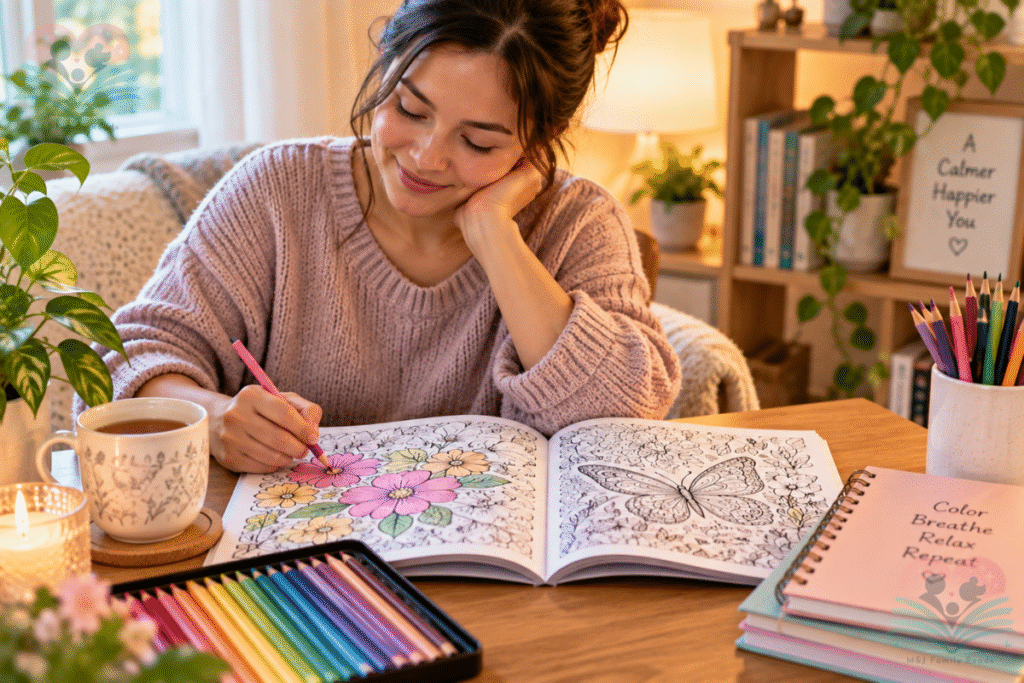
One of the most studied benefits of adult coloring is its potential to help people feel calmer and less anxious. The repetitive movement, limited choices, and structured patterns can give your attention somewhere specific to go when your thoughts feel busy.
A randomized controlled trial involving emergency-department patients found that people given adult coloring activities reported a greater decrease in anxiety after two hours than those in the placebo group.
A 2026 meta-analysis of 17 studies involving 987 hospitalized adults also found that mandala coloring was associated with reduced anxiety and stress. However, the researchers rated the overall quality of evidence as low, meaning more high-quality research is still needed.
So, coloring is better viewed as a simple relaxation activity, not a treatment for an anxiety disorder.
For more ideas on creating a calming coloring routine, read our guide to coloring books for stress relief and relaxation.
Coloring narrows your attention to manageable decisions:
Those small decisions can give your mind a temporary break from bigger concerns.
Coloring naturally asks you to focus on what is directly in front of you. Following lines, selecting colors, and noticing small details can create periods of focused attention that feel calming after hours of multitasking.
Coloring is sometimes described as a mindfulness activity, but the research deserves a little nuance.
One study found that simply coloring a mandala did not automatically increase mindfulness. When coloring was paired with guided mindfulness instructions, however, participants experienced better outcomes than with unguided coloring.
That means you do not need to call coloring “meditation” for it to be useful.
You can simply use it as an opportunity to focus on one thing.
Try putting your phone somewhere out of reach, setting aside 15 or 20 minutes, and paying attention to the movement of the pencil and the colors on the page.
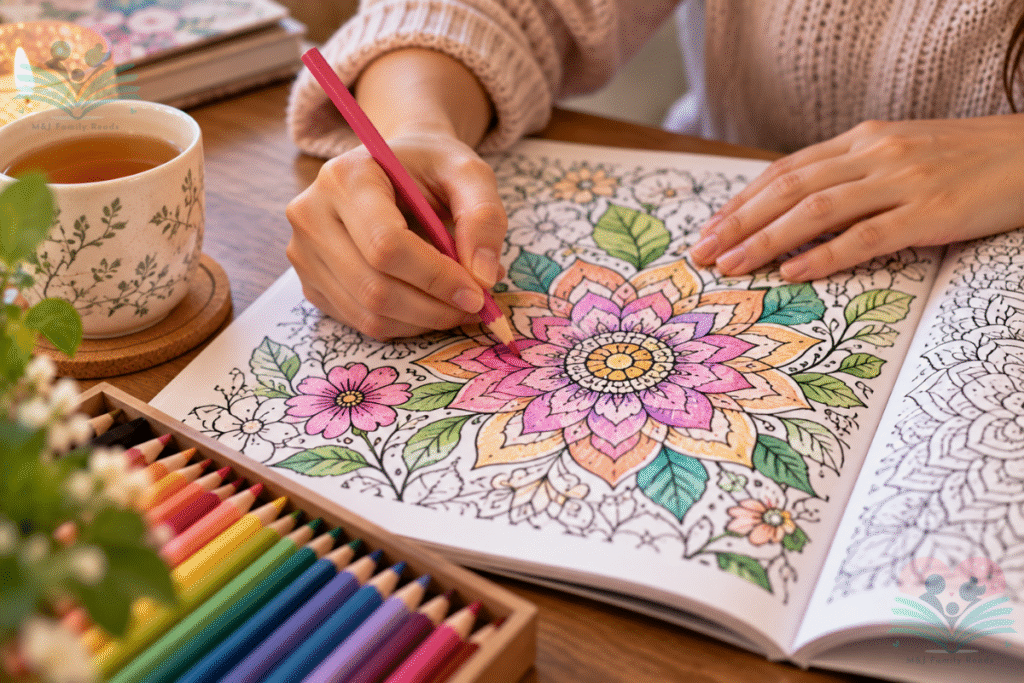
Adult coloring offers an easy way to spend a few quiet minutes without scrolling, streaming, replying, or refreshing. Because it is a physical activity done on paper, it can become a useful alternative when you want to disconnect from your phone or computer.
Many adults spend large parts of the day moving between screens.
Even our “breaks” can involve opening another app.
Coloring creates a different type of pause. Your hands stay occupied while your attention moves toward something slower and more tactile.
You might try coloring:
If relaxation is your main goal, our guide to the best adult coloring books for stress relief can help you choose the designs that suit you.
Coloring allows adults to make creative choices without the pressure of starting with a blank page. The drawing is already there, so you can focus on color combinations, shading, patterns, and personal style.
You do not need to consider yourself artistic.
No color is correct for a flower, animal, landscape, or abstract design unless you decide it is.
Want a purple tree?
Use purple.
Want every section of a mandala to follow the same palette?
Do that.
This freedom makes coloring approachable for people who enjoy creativity but feel intimidated by drawing or painting from scratch.
And because the stakes are so low, experimentation becomes part of the fun.
Coloring gives you a clear activity with visible progress. Watching an unfinished black-and-white page gradually fill with color can create a simple sense of accomplishment, even if you complete only a small section at a time.
Many everyday responsibilities never feel completely finished.
Another email, chore, appointment, or task is always waiting.
A coloring page is different.
You can see exactly what you have completed.
That small sense of progress can make coloring particularly enjoyable as a quiet hobby rather than another item on your productivity list.
You do not even have to finish the page in one sitting. Leave your pencils nearby and return whenever you have another few minutes.
Because coloring requires very little preparation, it can fit easily into an existing self-care or relaxation routine. A coloring book, a small collection of pencils, and a comfortable place to sit are usually all you need.
You could create a simple routine like this:
| Time | Simple Coloring Routine |
| Morning | Color for 10 minutes with coffee or tea |
| Lunch break | Complete one small section of a page |
| After work | Color for 15–20 minutes before checking social media |
| Evening | Choose a simple design and color while winding down |
| Weekend | Spend longer experimenting with detailed designs |
The goal isn’t to complete as many pages as possible.
The activity itself is the point.
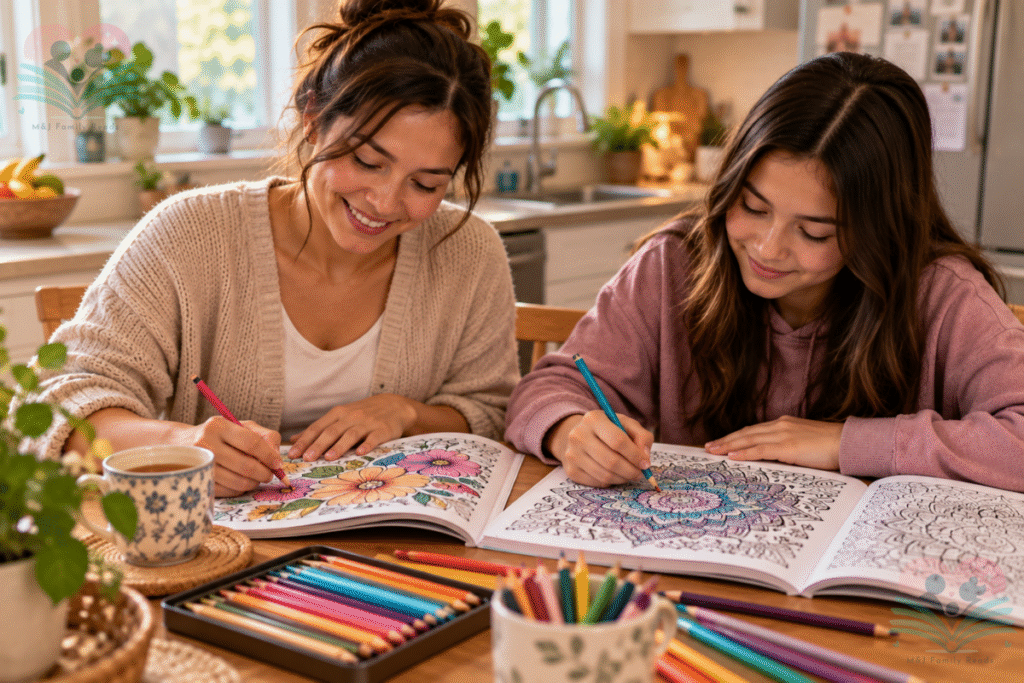
Coloring can also be a shared activity. Adults, teens, friends, couples, and family members can sit together and work on their own pages without needing complicated instructions or constant conversation.
That makes coloring particularly useful when you want an activity that feels social but still peaceful.
Everyone can choose a design that matches their interests and skill level.
For families looking for something that can appeal across age groups, explore our guide to choosing a coloring book for teens and adults.
You do not need special techniques to enjoy coloring, but a few simple habits can make the experience more relaxing.
Choose a design that feels enjoyable, not overly complicated. Put away unnecessary distractions. Use pencils, markers, or crayons that feel comfortable in your hand.
Most importantly, avoid turning coloring into another task you feel you need to do perfectly.
Try 10–20 minutes and see how you feel.
If you enjoy it, keep going.
If you want an easy place to begin, browse this adult coloring book on Amazon and make your next screen-free break a little more colorful.
Adult coloring may promote relaxation, reduce anxiety, support focused attention, provide a creative outlet, and offer a simple screen-free activity. Research has found promising anxiety-reduction effects in several populations, although results vary between studies.
Research suggests structured coloring, especially mandala coloring, may reduce perceived anxiety and stress in some settings. A recent meta-analysis found positive effects but also noted that the overall certainty of evidence was low, so coloring should be viewed as a supportive relaxation activity rather than a proven medical treatment.
Coloring can encourage present-moment focus, but it is not necessarily the same as mindfulness meditation. Research suggests mindfulness-guided coloring may produce stronger mindfulness effects than simply coloring without guidance.
There is no universal amount of time you need to color. Starting with 10–20 minutes is practical, and some research has examined sessions of around 20–30 minutes. The best routine is one you find enjoyable enough to repeat.
No. You can color almost any suitable design. However, adult coloring books often include patterns and illustrations created for older users, giving you more detailed or relaxing designs without requiring you to draw them yourself.
The benefits of coloring for adults come from something refreshingly simple: slowing down and giving your attention one enjoyable task.
A few minutes with a coloring book may help you step away from screens, settle into focused attention, explore your creativity, and create a quiet pause in a busy day. Research into adult coloring is still developing, but studies suggest it can be a useful relaxation tool, particularly for reducing short-term feelings of anxiety.
At MJ Family Reads, we believe enjoyable activities do not need to be complicated.
Ready to add coloring to your downtime? Discover this adult coloring book on Amazon and choose a page that makes you want to pick up your pencils.
Anxiety Relief Coloring Book for Teens: 30 Calming Benefits says:
[…] guide to the benefits of coloring for adults also explains how coloring can support relaxation and creative expression as teenagers grow into […]