
Some of the most common mistakes new parents make come from exhaustion, information overload, and the pressure to get everything right. The most helpful approach is to focus on safe sleep, learn your baby’s cues, build flexible routines, ask for help when you need it, and remember that parenting skills develop with practice.
As your baby grows into toddlerhood, new challenges will appear too. Resources such as The Tantrum Tamer from MJ Family Reads can help you understand difficult behavior and respond with more confidence.
Becoming a parent involves learning an enormous amount in a very short time. Even after reading books, watching videos, and listening to experienced parents, caring for your own baby can feel completely different.
At 2 a.m., after several wake-ups and a diaper change, perfect parenting probably isn’t top of mind. You are trying to understand what your baby needs.
That learning curve is normal.
The goal isn’t to eliminate every parenting mistake. It is to recognize the habits that create unnecessary stress or affect your baby’s safety and replace them with practical routines that work for your family.
For straightforward strategies you can return to when parenting feels complicated, explore these practical parenting guides and simple tools from MJ Family Reads.

One of the most common mistakes new parents make is treating every recommendation from friends, relatives, social media, and parenting forums as something they must follow.
The problem is simple: parenting advice often conflicts.
One person says never wake a sleeping baby. Another recommends a strict schedule. Someone else insists schedules should be avoided completely.
Instead of collecting more opinions, separate advice into two categories.
For health and safety decisions, use reliable medical guidance and your child’s healthcare professional. For everyday preferences such as routines, clothing, play, or how you organize your day, find an approach that suits your child and family.
You don’t need dozens of parenting techniques. You need a few reliable strategies you can use consistently.
Safe sleep is one area where parents should rely on evidence-based recommendations rather than family traditions or social-media advice.
The American Academy of Pediatrics recommends placing babies on their backs for sleep on a firm, flat sleep surface with only a fitted sheet. Keep soft bedding, pillows, toys, bumper pads, and other loose objects out of the baby’s sleep area. Room sharing without bed sharing is recommended for at least the first six months.
Move babies who fall asleep in car seats, swings, strollers, carriers, or slings to an appropriate firm sleep surface as soon as practical.
Safe-sleep recommendations can change as evidence develops, so check current guidance and ask your pediatrician if you have questions.

Crying can mean many things, and it is often a late sign of hunger. Babies can communicate hunger before they start crying.
For babies from birth to five months, early hunger cues can include bringing hands to the mouth, turning toward the breast or bottle, licking or smacking the lips, and clenching the hands. Signs of fullness can also help parents understand when their baby has had enough.
Learning these signals takes time.
Instead of expecting yourself to recognize every sound right away, look for patterns. You may gradually notice different behaviors when your baby is hungry, tired, uncomfortable, overstimulated, or simply looking for connection.
Another common new-parent mistake is expecting predictable sleep and feeding patterns too soon.
Newborn sleep can be fragmented. The American Academy of Pediatrics notes that newborns may sleep roughly 16–17 hours a day, but only for one or two hours at a time. Babies also differ in how much sleep they need.
A simple routine can still be useful. It creates familiar patterns without requiring every nap, feed, or bedtime to happen at exactly the same minute.
Think rhythm rather than rigid timetable.
As your baby grows, you can adjust routines around their changing sleep, feeding, play, and developmental needs.
It is easy to compare milestones, feeding, sleep, temperament, and behavior—especially when another parent says their baby already sleeps through the night or reached a milestone early.
Children develop at different rates.
Developmental milestones are useful tools for understanding skills most children achieve by particular ages, but they aren’t a parenting competition. The CDC recommends monitoring milestones and discussing concerns with your child’s doctor rather than simply waiting when you believe something may be wrong.
Use milestone information as a conversation tool, not a scoreboard.
New parents are surrounded by products promising easier sleep, smoother feeding, better development, or a calmer baby.
More gear doesn’t necessarily make parenting simpler.
Before purchasing something, ask:
Does my baby actually need this? Is it safe for its intended use? Will it solve a real problem in our routine?
This is particularly important with sleep products. The AAP advises parents to be cautious with products that conflict with safe-sleep recommendations or claim to reduce SIDS risk without supporting evidence.
Start with essentials and add items when a genuine need appears.
Caring for yourself is part of caring for a baby.
The CDC encourages parents of infants to look after their physical, mental, and emotional well-being. That doesn’t require an elaborate self-care routine.
Sometimes it means accepting a meal from a friend, sharing nighttime responsibilities where possible, taking a shower while someone trustworthy watches the baby, or asking for professional support when you need it.
Small amounts of practical support can make demanding days easier to manage.
Babies don’t arrive with subtitles.
Sometimes you’ll understand exactly why your baby is crying. Other times you’ll feed, burp, change, rock, and comfort them and still be unsure.
When crying becomes overwhelming, safety comes first. The CDC advises never shaking a baby. If you’re getting upset, put the baby somewhere safe and take a short break before checking again.
Over time, observing your child’s patterns can help you recognize what certain behaviors mean.
That skill becomes especially useful as babies become toddlers and crying mixes with frustration, independence, and tantrums.
The transition to toddlerhood can feel surprisingly fast. Your baby begins walking, communicating preferences, seeking independence, and testing what happens when they say “no.” Preparing for these changes early can help you understand the behavior behind the big emotions that often come next.
During the baby stage, much of parenting revolves around immediate needs: feeding, sleep, comfort, and safety. Toddlerhood adds another layer.
Your child wants to do more independently, but they may not yet have the words, patience, or emotional regulation skills to handle frustration.
That gap can show up as crying, resistance, hitting, throwing things, refusing everyday tasks, or eventually full tantrums.
Instead of waiting for challenging behavior to appear, start building a few simple habits as your baby approaches toddlerhood:
You can also find the related MJ Family Reads parenting resource on Amazon.
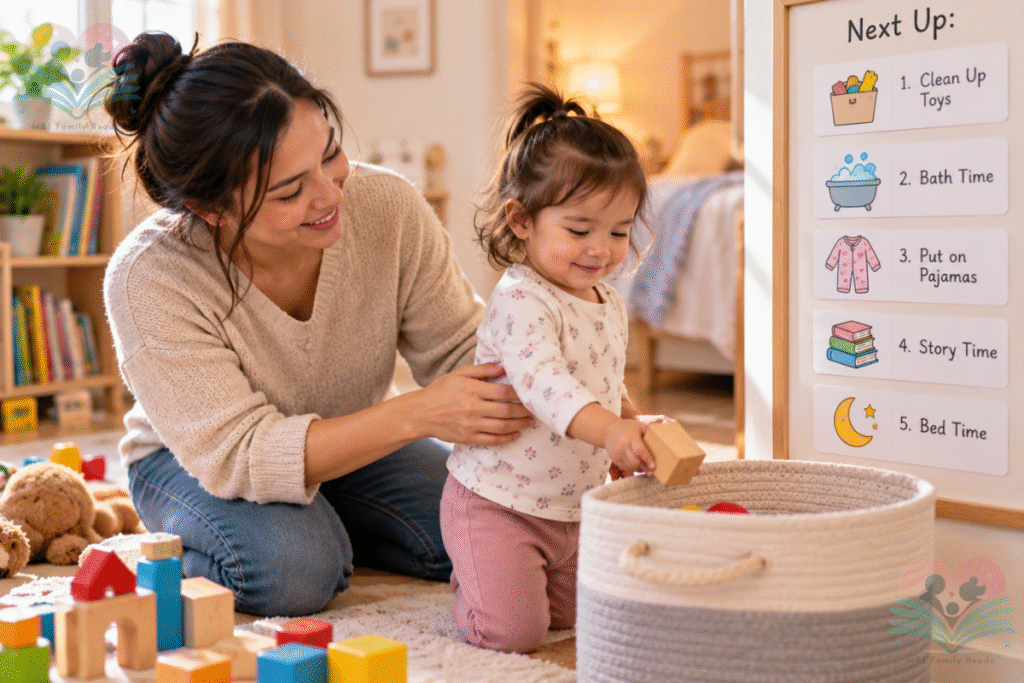
One of the biggest shifts in toddlerhood is realizing that difficult behavior is often a form of communication.
A toddler who drops to the floor because playtime has ended may be struggling with the transition. A child who screams because you cut their banana differently may be disappointed and doesn’t yet have the skills to manage it.
Understanding the trigger gives you something practical to work with.
You can begin asking:
What happened immediately before the behavior? What might my child be trying to communicate? Is there a predictable trigger I can address next time?
This approach can help you move from simply reacting to difficult moments toward understanding the patterns behind them.
For more everyday strategies as your child grows, explore these practical parenting guides and simple tools.
And when tantrums become part of daily life, The Tantrum Tamer: How to Decode & Prevent Tantrums from MJ Family Reads offers a practical next step for understanding triggers, preventing avoidable meltdowns, and responding more consistently.
Avoiding the common mistakes new parents make isn’t about creating a perfect routine or getting every decision right.
Start with the essentials: prioritize safety, learn your baby’s cues, build flexible routines, and choose your advice wisely.
Then allow your parenting approach to grow alongside your child.
The baby who once needed you to interpret every cry will gradually become a toddler with preferences, opinions, frustrations, and an increasing desire for independence. Understanding that transition can make toddler behavior feel less mysterious and give you practical ways to respond.
If you’re approaching that stage or already seeing the first big emotions, The Tantrum Tamer can help you identify what may be triggering tantrums and develop practical strategies for what comes next.
What to Say During a Toddler Tantrum: 15 Calming Phrases says:
[…] Learning to respond calmly takes practice. If you’re navigating the challenges of early parenthood, explore MJ Family Reads’ article on common mistakes new parents make and how to avoid them. […]